Monday, 9 November 2015

Facts of 'Pythagoras'

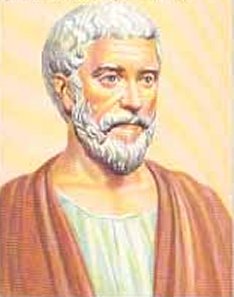
'Pythagoras'(570 BC to 495 BC)

He had a condition of Synaesthesia.

Pythagoras is someone most people have heard of, but he is an enigma. The trouble is trust. Can we trust what we read about him? Sadly, the answer is no. We can’t trust a lot of it, because if we did, we would have to believe he had god-like powers.

The Pythagoreans were a secretive bunch. Everything we know about Pythagoras was written many years after he lived. If we are to believe what is written, Pythagoras was like Dr. Doolittle and could talk to the animals. He once talked to an ox and persuaded it never to eat beans again! We do not know what Pythagoras really looked like.

There are no written records from his time. Information was passed on by word of mouth.
Most of what we know of him was written hundreds of years after he lived. It may not be reliable.
Keeping all of that in mind, here goes:


1. Pythagoras was also called Pythagoras of Samos or Pythagoras the Samian. Pythagoras was born on the Greek island of Samos. His father was a merchant. Pythagoras was taught mathematics by Thales, who brought mathematics to the Greeks from Ancient Egypt, and by Anaximander, who was an earlier student of Thales. Thales advised Pythagoras to visit Egypt, which he did when he was about 22 years old.

2. Pythagoras didn’t leave Egypt willingly. He was caught up in a Persian invasion and taken as a prisoner to Babylon. The Babylonians were probably the finest mathematicians in the world at that time.

3. He believed that science and religion were connected. He also believed that the human soul returned over and over again into people, animals and even vegetables. Pythagoras believed that he had already lived four lives, all of which he could remember. Others claimed that he was able to travel through space and time and could talk to plants and animals.

4. When Pythagoras moved to Croton in about 530 BC, he set up his religious sect in the Greek colony located in southern Italy. There is a written account that states Pythagoras took a lady of Croton named Theano as his wife. They produced four children a son named Telauges, and three daughters Damo, Arignote, and Myia. 

5. What were the mathematical achievements of the Pythagoreans?

  • The Tetractys – a perfect Pythagorean symbol, both mathematical and mystical.
  • Everything is a Number: The Pythagoreans believed that the basis of everything in the universe is numbers. Modern mathematicians and physical scientists have a similar belief.
  • The Existence of Numbers: The Pythagoreans were the first people to realize that all numbers have their own existence and don’t need to be associated with real objects to become real.
  • The Proof of Pythagoras’s Theorem: For a right angled triangle the sum of the squares on the other two shorter sides equals the hypotenuse squared.
  • The Discovery and Proof of Irrational Numbers: The mathematical proof that √2 is irrational was found by a Pythagorean.
  • The Discovery of Platonic Solids.
  • Math,Music and Astronomy: Pythagoras believed that, like everything else, music was based on whole number ratios. Pythagoras appears to have believed Earth was at the center of the universe. Later Pythagoreans like Philolaus disagreed.
6. More Facts of his life:
  • Pythagoras wore women's clothing!.
  • Pythagoras refused to eat bread unless it was cut in a certain way!
  • Pythagoras was afraid to eat beans because he thought if he farted a piece of his soul would escape!
  • Pythagoras also belived that animals have souls!
  • Pythagoras was a racist!
  • Pythagoras thought that the soul was immortal and went through a series of reincarnations!
  • Pythagoras said that he was once a warrior in the troja-war in his past life!
  • Pythagoras Refused to wear clothes made from animal skins.
7. Pythagoras may have had a condition known as synaesthesia. A person with the condition is said to be able to hear colours and see music, or associate smells with people’s names.

8. Great philosopher Plato was greatly influenced by Pythagoras and the Pythagoreans.  A form of drinking cup has been credited to Pythagoras called the Pythagorean cup or Pythagoras cup. The construction of the cup forces a drinker to only consume alcohol in moderation. The user fills the cup with wine that only reaches a certain level. If the user fills the cup only up to that level, he can peacefully enjoy his beverage. However, if he proves himself a greedy drinker, the cup will spill its entire contents out the bottom.

9. Pythagoras is thought to have died at the age of about 75 years. Some ancient sources claim he lived to be 100. There are conflicting accounts as to how Pythagoras died. Some say that he lost his life in the temple with his disciples when the building was set on fire. Others believe that he fled the city first relocating to Tarentum, and then finding his way to Metapontum when he was driven out of the previous destination. It is said that when he was there, he starved himself to death.

Sunday, 8 November 2015

Facts of 'Issac Newton'

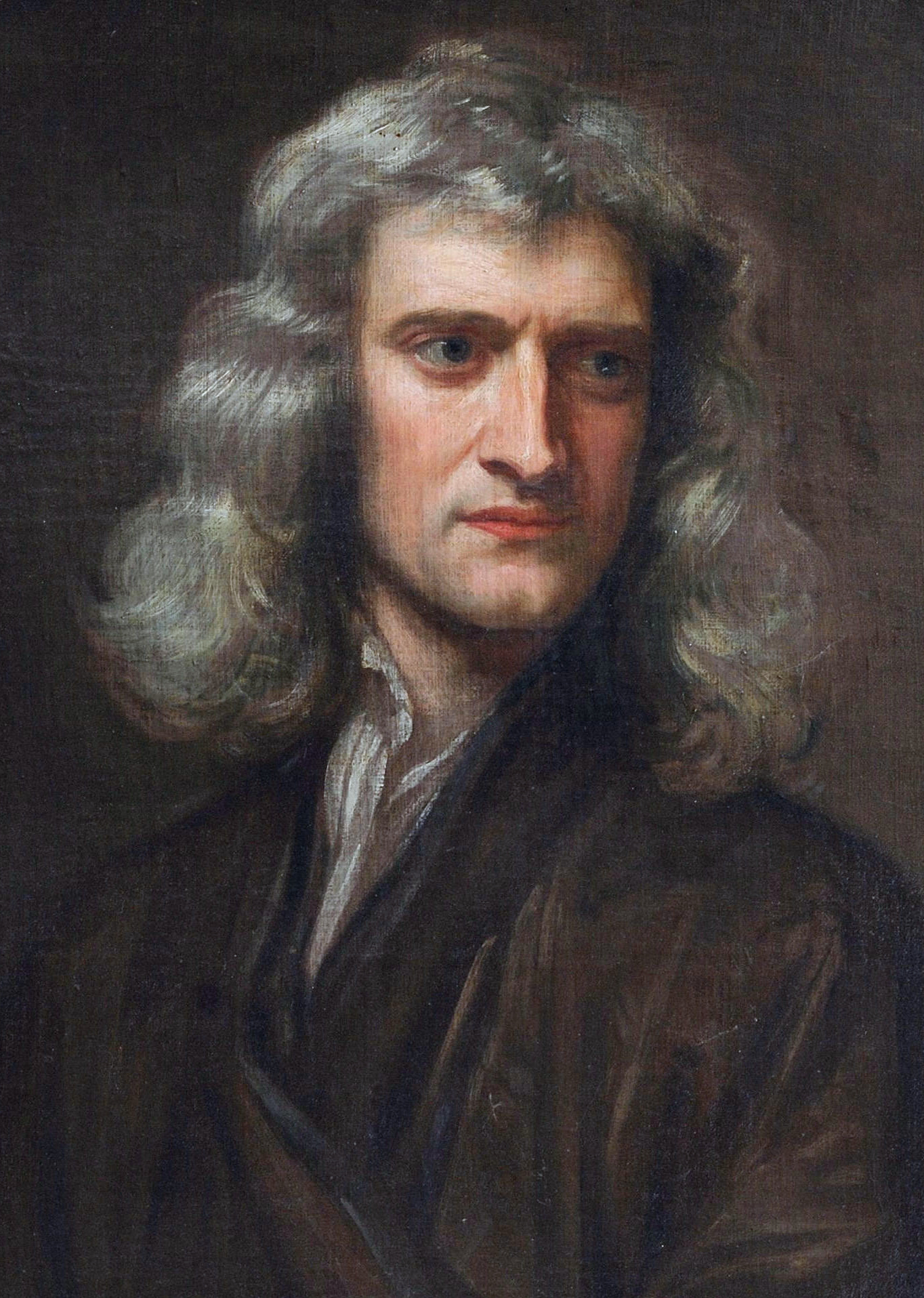
'Issac Newton'(1643 - 1727)


One genius dies, another one is born. Isaac Newton was born in 1642, the same year that Galileo Galilei died. Sir Isaac Newton was the greatest scientist that ever lived. More than any other person, Newton was single-handedly responsible for laying the the groundwork in classical mechanics, optics, and even mathematics. Landing man on the moon? Don't look at Einstein - it was all done with Newtonian physics.

1. Isaac was a very small baby not expected to survive. His mother even said that Isaac was so small that he could have fit inside a quart mug.

2. Newton actually studied for a degree in law. Newton’s mother wanted Isaac to become a farmer, but Isaac had no interest in farming exams and failed!

3. There's no doubt that Newton was brilliant, but what is not commonly known was that the majority of Newton's discoveries were made between his twenty-first and twenty-seventh years. Yet, he didn't disclose these findings to the world until years later.
4. Isaac Newton disliked to hear any criticism and he became embroiled in a bitter row with Robert Hooke, an original member of the Royal Academy.


5. One of the key mathematical achievements of Newton was the development of infinitesimal calculus. The calculus was also the center point of an intellectual battle between him and another mathematician Gottfried Leibniz over who had first developed the method.The Newtonian telescope, a type of reflecting telescope, was developed by Newton in 1668. It was the first functional telescope in the history of reflecting telescopes.

6. The equation devised by Newton about gravity is called the inverse square law of attraction. Newton concluded that sunlight is a combination of all the colors of the spectrum and that the sunlight separates when passed through the prism because its component colors are of differing refrangibility.

7. Newton’s laws become increasingly inaccurate when speeds reach substantial fractions of the speed of light, or when the force of gravity is very large. Einstein’s equations are then required to produce reliable results.
8. The “apple tree” story never happened. It is claimed Newton’s discovered the theory of gravity after watching an apple fall in the orchard. Newton himself would tell the story of an apple falling from a tree giving him inspiration for his work on gravity. However, there is no evidence he was actually hit by an apple!

9. Worried about the supposed Apocalypse in 2012? Never Fear: Newton spent a lot of time studying the subject. In fact, he believed that God had chosen him specifically to interpret the Bible — and concluded that the world would end no sooner than 2060.
10. He was elected as Member of Parliament for the University in 1700, but only held this post for a year.

11. In 1696, Newton was appointed warden of the Royal Mint. He took his duties very seriously, seeking to prevent corruption. As master of the Mint, Newton moved the British currency, from the silver to the gold standard.

12. Newton was fascinated with religion, though didn’t hold orthodox views. He wrote an article on textual criticism of the Bible. In spite of his deep religious conviction, Newton was unorthodox when it comes to his belief of the devil, spirits and ghosts. He also assailed people who claimed to be tempted by personal demons as deluded by their own imaginations.
13. His dog set his laboratory on fire, ruining 20 years of research. Late in life, Newton suffered a nervous breakdown and became known for rather eccentric behavior. Newton has the most valuable tooth. One of his teeth was sold in 1816 at auction for approx $3,600. In today’s terms that’s about $35,000, prompting Guinness World Records to declare it the most valuable tooth in the world.

14. One of Newton’s most famous quotes was

“If I have seen further it is by standing on the shoulders of giants.”

15. English poet Alexander Pope wrote the following epithet for Newton.

“Nature and nature’s laws lay hid in night;

God said “Let Newton be” and all was light.”


16. The Great Albert Einstein kept A picture of the great Newton was always on his study wall alongside ones of Michel Faraday and James Clerk Maxwell.

Saturday, 7 November 2015

Facts of 'Ptolemy'

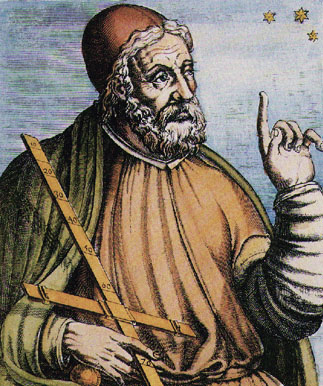
'Ptolemy'(90 AD - 168 AD)

                                             Claudius Ptolemaus - A true Polymath.. ;                                  


1. As for the details of the life of Claudius Ptolemy, little is known and most is lost to history. Much of what is believed to be true about Ptolemy comes from texts that were written about him centuries after his death, and thus may not be accurate. Scholars are certain that Ptolemy was ethnically Greek and nationally a Roman – but also influenced by the ancient cultures of Egypt and even Babylon.

2.  The name Claudius Ptolemaeus is composed of the Greek name Ptolamaeus and the Roman name Claudius. However, he is believed to have been born in Egypt.

3. Ptolemy can be described as a polymath because his studies ranged across an astonishing array of disciplines, from astronomy and geography, to mathematics, philosophy, literature and poetry. Ptolemy is most famous for his ground-breaking work The Almagest, which is a treatise on mathematics and astronomy. It described the structure of the heavens as it was understood at the time.

4. In Ptolemy’s day that meant that the earth was the center of the universe, and that the sun and other planets revolved around the earth. Ptolemy’s “geocentric” system was accepted for some 1,400 years.
In the Ptolemaic system, the earth was not described as flat – as was the general belief – but as a sphere. 


5. Another of Ptolemy’s great works was called the Geographica – a comprehensive book which described the geography of the known world. The Geographica was relied upon heavily for centuries as the standard text for knowing where cities and nations were located around the world. It included latitudes and longitudes, providing exact coordinates that sea-goers and travelers needed to find their way.


6. Christopher Columbus and Magellan had used Ptolemy's version of the world map on their voyages although it was very inaccurate.

7. Ptolemy was the world’s foremost expert on astrology, which in ancient times was an extremely important and fundamental way of understanding the fate and workings of all humanity. He wrote a series of four books called the Tetrabiblos, which for centuries were the central “instruction manuals” for applying and understanding astrology.

8. Named after Ptolemy are Ptolemy's theorem in geometry, Ptolemy star cluster, Ptolemaeus craters on Moon and Mars.


9. His epigram, which he is said to have written himself read:

Well do I know that I am mortal, a creature of one day.
But if my mind follows the winding paths of the stars
Then my feet no longer rest on earth, but standing by
Zeus himself I take my fill of ambrosia, the divine dish.

Thursday, 5 November 2015

Facts of 'Johannes Kepler'

'Johannes Kepler'(1571-1630)

        He said he would solve it in 8 days but it took 8 years.....!


               Johannes Kepler helped lead a scientific revolution in the 17th century with his amazing work in the field of astronomy. Among his many contributions were the three laws of planetary motion.

1. The young Johannes Kepler was prone to ill-health. His hands were crippled and his eyesight permanently impaired by smallpox. 

2. Kepler was interested in astronomy from an early age, this interest was further piqued when he witnessed both a comet in 1577 as well as a lunar eclipse in 1580. 

3. When Kepler was three years old, his father joined a group of mercenary soldiers to fight the Protestant uprising in Holland, thereby disgracing his family. Soon after his return in 1576, he again joined the Belgian military service for a few years; and in 1588 he abandoned his family forever. Kepler’s mother used to collect herbs and natural medicines. She was considered to be a witch. At one point Kepler had to hire lawyers to defend his mother from being sentenced to death. His grandmother was tried in the Salem Witch Trials and sentenced to death. 

4. Kepler’s work on planetary motion helped Isaac Newton later devise his own theory of universal gravitation. He developed the Rudolphine Tables which contained calculations using logarithms. Using these perpetual tables, Kepler calculated the planetary positions and predicted the transit of Venus and Mercury across the face of the sun. The three laws of planetary motion devised by Kepler are:
  • The orbit of every planet is an ellipse with the sun at a focus.
  • A line joining a planet and the sun sweeps out equal areas during equal intervals of time.
  • The square of the orbital period of a planet is directly proportional to the cube of the semi-major axis of its orbit.

5. Famous Johannes Kepler quotes include: “Nature uses as little as possible of anything ;
“I much prefer the sharpest criticism of a single intelligent man to the thoughtless approval of the masses.”

6. A wealthy Danish nobleman, Brahe built an observatory in Prague where he tracked the motions of the planets and maintained the most accurate observations of the solar system at the time. In 1600, Brahe invited Kepler to come work with him. He assigned Kepler to solve the mystery of Mars, one of the most puzzling problems in astronomy at the time.Kepler received a letter from Galileo thanking him for believing in his planetary discoveries.

7. The Martian problem, which Kepler said he would solve in eight days, took nearly eight years. Astronomers had long struggled to figure out why Mars appeared to walk backwards across the night sky. No model of the solar system — not even Copernicus' — could account for the retrograde motion.

8. Meanwhile, another discovery molded Kepler’s life: the eldest daughter of a wealthy mill owner, Barbara Müller, had “set his heart on fire .” Two years younger than Kepler, she had been widowed twice. Early in 1596 Kepler sought her hand, but his seven-mouth absence on a trip to Tübingen almost scuttled the courtship. The wedding took place 27 April 1597, under ominous constellations, as Kepler noted in his diary

9. Though Kepler is best known for his defining laws regarding planetary motion, he made several other notable contributions to science. He was the first to determine that refraction drives vision in the eye, and that using two eyes enables depth perception. He created eyeglasses for both near and farsightedness, and explained how a telescope worked. He described images and magnification, and understood the properties of reflection.

10. Though Kepler is best known for his defining laws regarding planetary motion, he made several other notable contributions to science. He was the first to determine that refraction drives vision in the eye, and that using two eyes enables depth perception. He created eyeglasses for both near and farsightedness, and explained how a telescope worked. He described images and magnification, and understood the properties of reflection.

11. Johannes Kepler died after falling ill at the age of 58, on November 15, 1630 in the German city of Regensburg. Today Kepler’s grave is lost. The graveyard he was buried in was destroyed during religious battles a few years after he was buried.
 
12. Kepler wrote a book called The Dream (1634), published after his death, that was considered an early work of science fiction. The book was an imaginative story of a voyage to the moon.

13. In recognition of his contribution to his our understanding of the motion of the planets, NASA named their planet-finding telescope after the German astronomer.


Wednesday, 4 November 2015

Facts of 'Nicolaus Copernicus'

'Nicolaus Copernicus'(1473 - 1543)

He never earned a bachelor's degree.
Nicolaus Copernicus was an astronomer who changed how we viewed the positioning of the Sun, Earth and other celestial objects in space. He reasoned that it was the Sun at the middle of the known Universe and not the Earth, an idea that was strongly opposed at the time.


1. The astronomical model that Copernicus developed was called heliocentrism (helios means Sun). It has the Sun motionless at the center of the Universe while the Earth and other planets rotate around it in circular paths. Many believe that the theory and ideas put forward by Copernicus started modern astronomy and were the beginning of a scientific revolution.

2. Copernicus's skills were not limited to just astronomy. Among other things, Copernicus was also a physician, scholar, economist, translator, mathematician, artist and diplomat. The chemical element Copernicum is named after Copernicus. It has the symbol Cn and atomic number 112.

3. He went to a lot of college, but there's no record of him ever earning a bachelor's degree. He attended the University of Cracow, the University of Bologna and the University of Padua. At the time, men didn't need to get a bachelor's for a church career or to study for a higher degree, so Copernicus's career path wasn't unusual, according to Stanford Encyclopedia of Philosophy.

4. Famous Nicolaus Copernicus quote "For when a ship is floating calmly along, the sailors see its motion mirrored in everything outside, while on the other hand they suppose that they are stationary, together with everything on board. In the same way, the motion of the earth can unquestionably produce the impression that the entire universe is rotating."

5. Copernicus's work ‘On the Revolutions of Celestial Spheres’ was published shortly before he died in 1543. The sketch set forth seven axioms, each describing an aspect of the heliocentric solar system: 
  • Planets don't revolve around one fixed point; 
  • the earth is at the center of the moon's orbit; 
  • The sun is at the center of the universe, and all celestial bodies rotate around it; 
  • The distance between the earth and sun is only a tiny fraction of stars' distance from the earth and sun; 
  • Stars do not move, and if they appear to, it is only because the earth itself is moving; 
  • Earth moves in a sphere around the sun, causing the sun's perceived yearly movement; and
  • Earth's orbit around the sun causes the planets to orbit in the opposite direction.

6. The Catholic Church banned De revolutionibus posthumously, and the book remained on the list of forbidden reading material for nearly three centuries thereafter. In the 17th century, when the ban on De revolutionibus orbium coelestiumwas lifted, Kepler revealed to the public that the preface had indeed been written by Osiander, not Copernicus.

7. Nicolaus Copernicus died of a stroke, at the age of 70, on May 24, 1543. He had not married and had no children. He had devoted his life to science, the church, and government .He was buried in Frombork Cathedral, Poland. His grave was lost for centuries, but found again in 2005. His remains were reburied in Frombork Cathedral in 2010. His new tombstone shows a golden sun with six planets orbiting it.

Tuesday, 3 November 2015

Facts of 'Galileo Galilei'

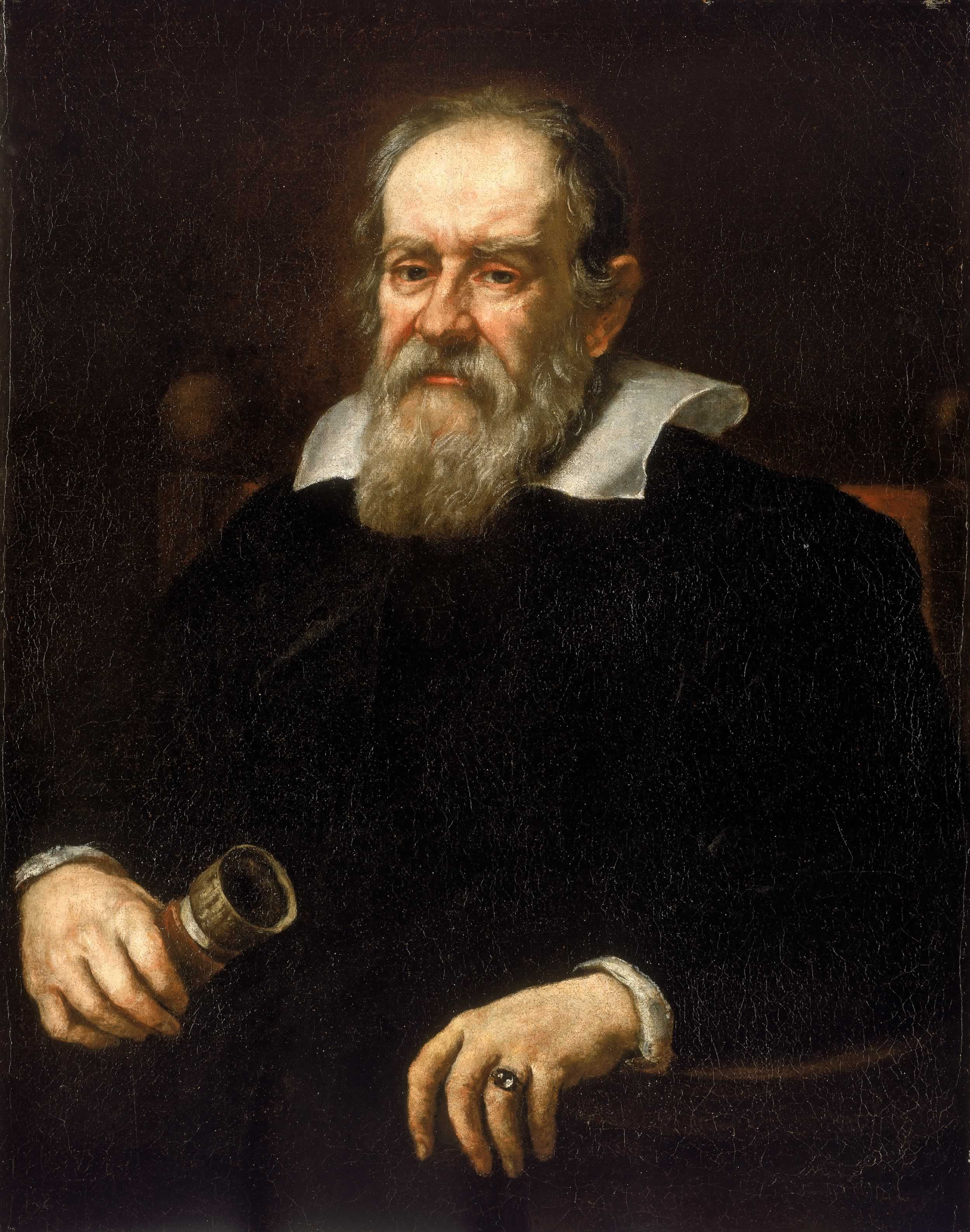
The Scientist - 'Galileo'(1564 - 1642)

Did he really invent the telescope?????


One of the most prolific scientists of all time, Galileo’s life and accomplishments has been studied and written about in detail for centuries. From his discovery of the moons of Jupiter to his fight with Pope Urban VIII, noted authors and playwrights have been fascinated with both Galileo’s life and contributions. Galileo claimed to have discovered sunspots and that the sun rotates. His abrasive and outspoken criticism of Aristotelian philosophy and his obvious acceptance of the Copernican world view, particularly in his Dialogue concerning the Two Chief World Systems, led him into serious trouble with the Roman Catholic Church, which placed him under house arrest for the last eight years of his life.Some interesting facts...


1. Galileo was said to have dropped two cannon balls of different masses from the leaning tower of Pisa to demonstrate that their speed of descent was independent of their mass. Many people believe this story to be untrue since its only source was Galileo’s secretary.

2. Galileo was a ground breaking astronomer, physicist, mathematician, philosopher and inventor. Among his inventions were telescopes, a compass and a thermometer. He didn’t invent the telescope, either—he got the idea from a Dutch spectacles maker who had invented a spyglass. (He was the first to use a telescope to formally observe the sky, though.)

3. Galileo never married and had all his children out of wedlock with Marina Gambia, whom he met on a trip to Venice.

4. In March 1610, he published a small booklet, The Starry Messenger, revealing his discoveries that the moon was not flat and smooth, but a sphere with mountains and craters. In the same year Galileo discovered four satellites in orbit around Jupiter.

5. While many remember Galileo’s confrontation with the church, many forget that both his daughters joined the convent of San Matteo in Arcetri and remained there for the rest of their lives.

6. Joseph Nicolas Robert-Fleury painted “Galileo before the Holy Office,” a representation of the scientist speaking before the clergy currently on display at the Luxembourg Museum.

7. Galileo was an accomplished lutenist, learning from his father, Vincenzo Galilei, who was a composer and music theorist.

8. While Galileo firmly believed in Copernicus’s theory that the Earth was not the center of the universe, he did not believe in his Kepler’s theory that the moon caused the tides. For promoting Copernican theory, Galileo was sentenced to life imprisonment, later reduced to house arrest.

9. In the last year of his life, when he was totally blind, Galileo designed an escapement mechanism for a pendulum clock called Galileo’s escapement.According to legend, Galileo began his study of the pendulum while watching a lamp swing back and forth in the cathedral of Pisa. Galileo never succeeded in building a pendulum clock.

10. A hundred years after he died, when his body was being moved for reburial, a fan snipped off the middle finger of his right hand as a memento.The middle finger of Galileo’s right hand has been exhibited at the Museo Galileo in Florence, Italy. The finger points toward Rome.

11. German dramatist Bertolt Brecht wrote a play about Galileo entitled Life of Galileo, which first appeared on Broadway in 1947 with Charles Laughton as the title character.The song “Galileo” is the biggest hit of the folk group Indigo Girls. The song is about reincarnation through the lens of the story of Galileo’s role in the scientific revolution.

12. Galileo, buried between Michelangelo and Machiavelli, is said to have had his gravestone inscribed with the words “But the Earth does move.” It’s not true. 

Monday, 2 November 2015

Facts of 'Albert Einstein'


Albert Einstein - Yoda Star Wars (Something is similar...)


1.   Einstein's great breakthroughs came from visual experiments performed in his head rather than  the lab.

2.   Albert Einstein considered himself an Agnostic,not an Atheist.

3.   Einstein was a slow learner as a child and spoke very slowly,

4.   The pathologist who made Einstein body's autopsy stole his brain and kept it in a jar for 20 years.

5.   Einstein's Nobel Prize money went to his Ex-Wife as a divorce settlement.

6.   Einstein was offered the Presidency of Israel which he politely declined.

7.   Einstein failed his University entrance exam and had to reapply a year later.

8.   Einstein never received a Nobel Prize for Relativity. It was actually for the Photoelectric Effect.

9.   Einstein was famous for having a bad memory. He couldn't remember names dates and phone numbers.

10. Einstein had an illegitimate daughter born in 1902.

11. Einstein, Darwin, Allan Poe & Saddam Hussein, all married their first cousins.

12. Austrian Physicist Friedrich Hasenohrl published the basic equation E=mc^2, a year before Einstein did.

13. Albert Einstein's eyes remain in a safe box in NYC.

14. Yoda, from Star Wars, was modeled after the appearance of Albert Einstein.

15. Albert Einstein had no car of his own and he also never learned how to drive.

16. Albert Einstein didn't like to wear Socks.

17. Albert Einstein had a parietal lobe that was 15% larger than the average brain.

18. Galileo Galilei was Albert Einstein's favourite Scientist.

19. Albert Einstein denounced Segregation, calling it a "Disease of White People" and worked against Racism in America,

20. Hours before his death Einstein was still attempting to prove his theory of everything.