'Ptolemy'(90 AD - 168 AD)
Claudius Ptolemaus - A true Polymath.. ;

Claudius Ptolemaus - A true Polymath.. ;
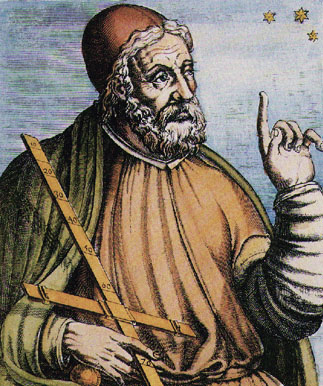
1. As for the details of the life of Claudius Ptolemy, little is known and most is lost to history. Much of what is believed to be true about Ptolemy comes from texts that were written about him centuries after his death, and thus may not be accurate. Scholars are certain that Ptolemy was ethnically Greek and nationally a Roman – but also influenced by the ancient cultures of Egypt and even Babylon.
2. The name Claudius Ptolemaeus is composed of the Greek name Ptolamaeus and the Roman name Claudius. However, he is believed to have been born in Egypt.
3. Ptolemy can be described as a polymath because his studies ranged across an astonishing array of disciplines, from astronomy and geography, to mathematics, philosophy, literature and poetry. Ptolemy is most famous for his ground-breaking work The Almagest, which is a treatise on mathematics and astronomy. It described the structure of the heavens as it was understood at the time.
4. In Ptolemy’s day that meant that the earth was the center of the universe, and that the sun and other planets revolved around the earth. Ptolemy’s “geocentric” system was accepted for some 1,400 years.
In the Ptolemaic system, the earth was not described as flat – as was the general belief – but as a sphere.
5. Another of Ptolemy’s great works was called the Geographica – a comprehensive book which described the geography of the known world. The Geographica was relied upon heavily for centuries as the standard text for knowing where cities and nations were located around the world. It included latitudes and longitudes, providing exact coordinates that sea-goers and travelers needed to find their way.
6. Christopher Columbus and Magellan had used Ptolemy's version of the world map on their voyages although it was very inaccurate.
7. Ptolemy was the world’s foremost expert on astrology, which in ancient times was an extremely important and fundamental way of understanding the fate and workings of all humanity. He wrote a series of four books called the Tetrabiblos, which for centuries were the central “instruction manuals” for applying and understanding astrology.
8. Named after Ptolemy are Ptolemy's theorem in geometry, Ptolemy star cluster, Ptolemaeus craters on Moon and Mars.
9. His epigram, which he is said to have written himself read:
Well do I know that I am mortal, a creature of one day.
But if my mind follows the winding paths of the stars
Then my feet no longer rest on earth, but standing by
Zeus himself I take my fill of ambrosia, the divine dish.

No comments:
Post a Comment